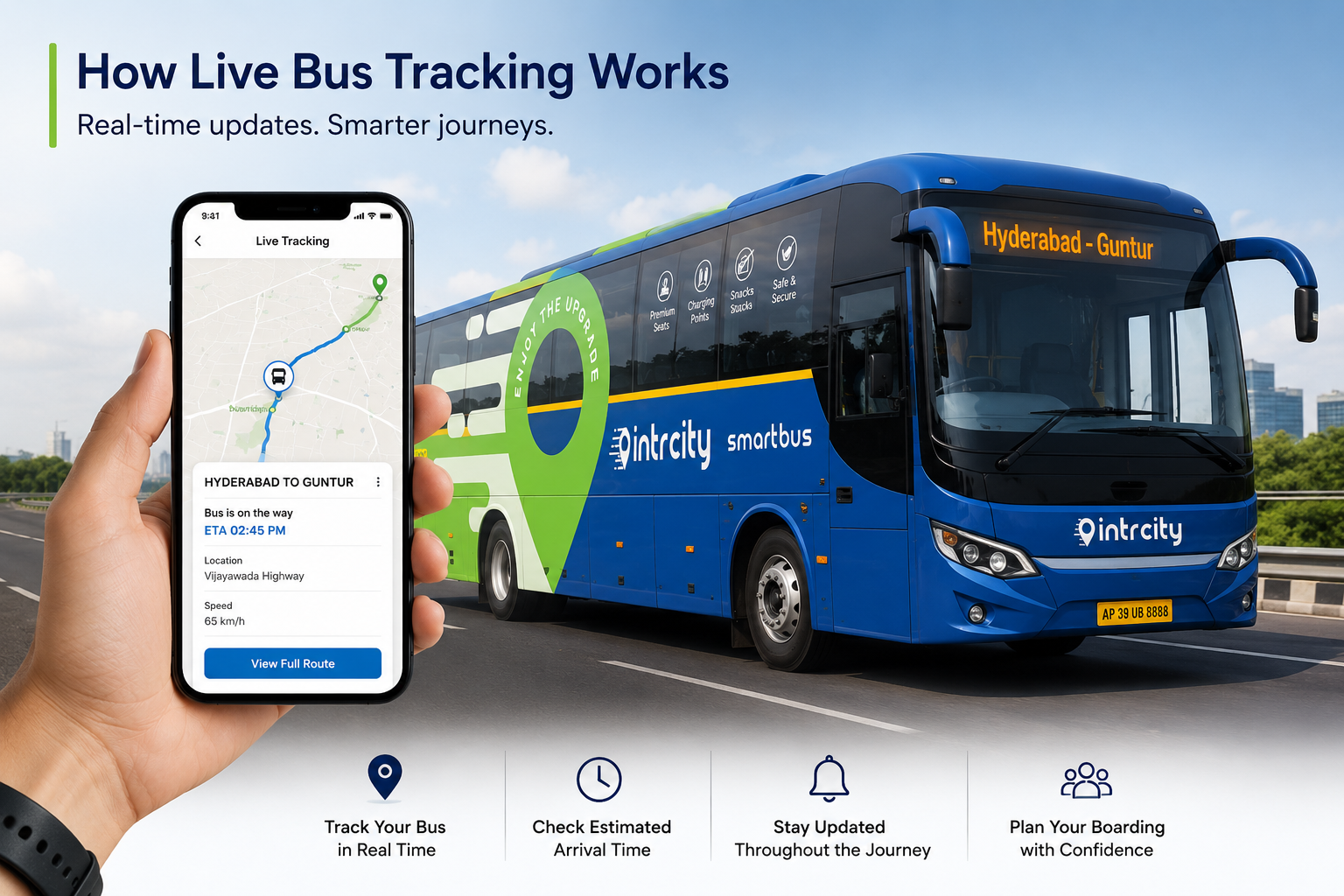

It will be very easy for travelers to plan the bus journey if they get timely information regarding their vehicle. Previously, travelers used to rely upon the time schedule, phone call, or information provided by the bus company to know the whereabouts of their bus.
The facility of live bus tracking can be used to help travelers to know where their bus is located and where it has reached. It is possible for the traveler to know where the bus is located using the website or application.
Travelers can make plans according to the information related to the whereabouts of the bus. It will be particularly helpful in long distance and intercity journeys where there are possibilities of delay due to traffic, road conditions, weather, and other unforeseen circumstances.
What Is Live Bus Tracking?
Live tracking is a useful feature that lets passengers check where their bus is during the journey. Depending on the service, it may also provide details such as the route, trip progress, expected arrival time, and boarding information.
This information is usually available through a website or mobile app. A GPS-enabled device in the bus sends location updates to the operator’s system, which then displays the relevant information to passengers.
The experience can vary between services. Some platforms show the bus moving on a map, while others simply provide the latest location or an estimated arrival time.
How Does Bus Tracking Technology Work?
The technology behind real-time vehicle tracking involves several steps. A GPS-enabled device determines the location of the bus and communicates that information through a network. The operator’s system then processes the data and makes the relevant information available to passengers.
Here is a simplified overview:
| Step | What Happens |
| GPS-enabled vehicle | The bus’s location is identified using GPS technology. |
| Data transmission | Location information is sent through a communication network. |
| Tracking system | The operator’s platform processes the incoming information. |
| Digital platform | Relevant details are displayed through a website or app. |
| Passenger access | Travelers can check the available journey information. |
Updates may be provided at regular intervals rather than continuously. Therefore, the location shown on a tracking platform may sometimes have a small delay.
How Can You Track Your Bus?
The process depends on the operator, but accessing journey information is generally simple when the service supports online tracking.
A typical process may involve the following steps:
- Book your bus ticket through the operator’s website or app.
- Keep your booking or journey details available.
- Open the relevant tracking or journey section.
- Select your scheduled service.
- Check the available vehicle location or journey status.
- Use the information to plan your boarding or arrival.
Passengers should also keep their original ticket information handy. Tracking information is useful for monitoring the journey, but it does not replace details such as the boarding point, scheduled departure time, or destination.
Why Is Real-Time Bus Location Useful?
Knowing where a bus is can make a difference to how passengers manage their time. Instead of relying entirely on a fixed schedule, travelers can use the latest available information to understand the progress of their journey.
1. Helps Reduce Unnecessary Waiting
Passengers often reach the boarding point early because they are unsure when their bus will arrive. If the operator provides vehicle-location updates, travelers can use them as an additional reference when planning their time.
However, it is still advisable to reach the boarding point with sufficient time before the scheduled departure.
2. Makes Boarding More Convenient
A bus may be approaching the pickup location while a passenger is still some distance away. Journey updates can help travelers stay prepared and avoid being unnecessarily far from the boarding point.
This can be especially useful at busy pickup locations where finding the correct bus may take some time.
3. Gives Better Visibility Into the Journey
Scheduled timings are based on expected travel conditions. Actual road conditions can be different.
Traffic congestion, diversions, road construction, weather, and other factors can influence travel time. Real-time information gives passengers a better understanding of how the journey is progressing.
4. Helps With Arrival Planning
Knowing the approximate progress of a bus can be helpful when passengers have another plan after reaching their destination.
For example, a traveler may need to arrange a cab, meet someone at the destination, or reach a hotel. An estimated arrival update can help them organize these arrangements more effectively.
5. Useful for Long-Distance Travel
The longer the journey, the more useful regular updates can become. On an intercity route lasting several hours, passengers may want to know whether the vehicle is progressing normally.
This can make the overall travel experience feel more predictable.
When Is Bus Tracking Most Useful?
The usefulness of this feature can vary depending on the type of journey.
| Travel Situation | How It Can Help |
| Long-distance journey | Monitor progress over several hours |
| Intercity travel | Get a better idea of the vehicle’s location |
| Busy boarding point | Stay prepared as the bus approaches |
| Early-morning arrival | Plan onward transportation |
| Overnight journey | Check progress without repeatedly calling the operator |
| Meeting someone at destination | Estimate when the bus is likely to arrive |
It is not essential for every passenger, but it can be particularly helpful when timing and coordination are important.
What Information Can You Usually See?
The information available depends on the operator’s tracking system. Some services may offer only basic updates, while others provide more detailed journey information.
Commonly available details may include:
- Current or recently updated vehicle location
- Route information
- Journey progress
- Estimated arrival time
- Departure status
- Boarding information
- Destination details
- Approximate distance or progress remaining
Not every service provides all of these details. Travelers should therefore check the information available for their specific booking.
Using GPS Tracking During a Long Journey
Long-distance bus routes can pass through multiple cities, highways, and traffic conditions. Because of this, actual travel time may differ from the original estimate.
GPS-based tracking can give passengers additional visibility during such journeys. For example, someone traveling overnight may want to check the journey progress before arranging transportation from the destination.
Similarly, a passenger traveling for work may use the estimated arrival information to adjust their plans if the journey is taking longer than expected.
The feature should be treated as a useful source of information rather than an exact prediction of arrival.
How It Works With Online Bus Booking
Digital booking and tracking can complement each other. When a passenger purchases a ticket online, their journey details are stored digitally. If the operator supports vehicle tracking, the same journey may also provide access to location or progress updates.
This creates a more connected experience.
| Online Booking | Tracking Feature |
| Select a route | Monitor the selected service |
| Check departure time | Follow journey progress |
| Choose a seat where available | Check vehicle location where supported |
| Receive ticket details | Access journey updates |
| Plan the trip | Monitor progress during travel |
Together, these services can make it easier to organize a bus journey without depending entirely on manual updates.
What Can Affect Tracking Information?
Although GPS technology can provide useful information, the displayed location may not always update instantly.
Several factors can influence the information shown on a tracking platform:
- Weak mobile network connectivity
- GPS signal limitations
- Delayed data transmission
- Technical problems with tracking equipment
- Temporary platform issues
- Network interruptions
- Changes in traffic or road conditions
For this reason, passengers should not assume that the displayed arrival time is guaranteed.
If the vehicle appears to be delayed, travelers should consider the available official updates and allow additional time for their journey.
Tips for Making the Most of Bus Tracking
A few simple practices can help travelers use the feature more effectively.
Check Your Ticket First
Before checking the vehicle’s location, confirm your route, boarding point, departure time, and other booking details.
Keep Your Phone Charged
If you are planning to check updates while traveling, make sure your smartphone has enough battery.
Reach the Boarding Point Early
Tracking information should not be used as a reason to arrive at the last minute. Traffic and other factors can change quickly.
Check Before Leaving for the Pickup Point
If you have to travel some distance to reach the boarding location, checking the latest available information before leaving can help you plan better.
Keep Other Journey Details Handy
Tracking is an additional travel tool. Your ticket, boarding information, and operator notifications remain important throughout the journey.
Live Bus Tracking vs Traditional Travel Updates
Traditional bus updates often depended on communication between passengers, drivers, conductors, or customer-support teams. Digital tracking provides another way to access journey information.
| Traditional Updates | Digital Tracking |
| Often depends on manual communication | Information can be accessed through a digital platform |
| May require a phone call | Can often be checked online |
| Limited visibility of vehicle movement | Provides location or progress information where available |
| Updates may not be available immediately | Data can be updated periodically |
| More dependent on staff assistance | Gives passengers more direct access to information |
This does not mean traditional communication is no longer useful. Customer support and operator notifications can still be important when there is a significant delay or service-related issue.
Is Tracking Available on Every Bus?
No. The availability of this feature depends on the bus operator, route, vehicle, and technology being used.
A service may offer tracking on certain routes or vehicles but not necessarily across its entire network.
If knowing the vehicle’s location is important to you, check the booking platform or service information before confirming your ticket.
The Future of Technology in Bus Travel
Technology is changing how people plan and experience intercity travel. Online ticket booking, digital payments, mobile tickets, automated notifications, GPS-based services, and journey updates are gradually becoming part of the modern travel experience.
Real-time vehicle information is particularly useful because it connects the planned schedule with what is happening on the road.
As technology develops, passengers may get access to more detailed information about journey progress, estimated arrival times, route conditions, and service updates. This could make travel planning even more convenient in the future.
Conclusion
Real-time tracking gives travelers a simple way to stay updated throughout their journey. By checking the vehicle’s location and progress, passengers can plan when to reach the boarding point, manage their time, and make arrangements for their arrival. This can be particularly helpful on long-distance and intercity routes, where traffic and road conditions may affect travel times.
When booking a bus ticket online, having access to journey updates can make the overall travel experience more convenient. While estimated arrival times may change due to road conditions or unexpected delays, regular updates help passengers stay better prepared and plan their journey with greater confidence.